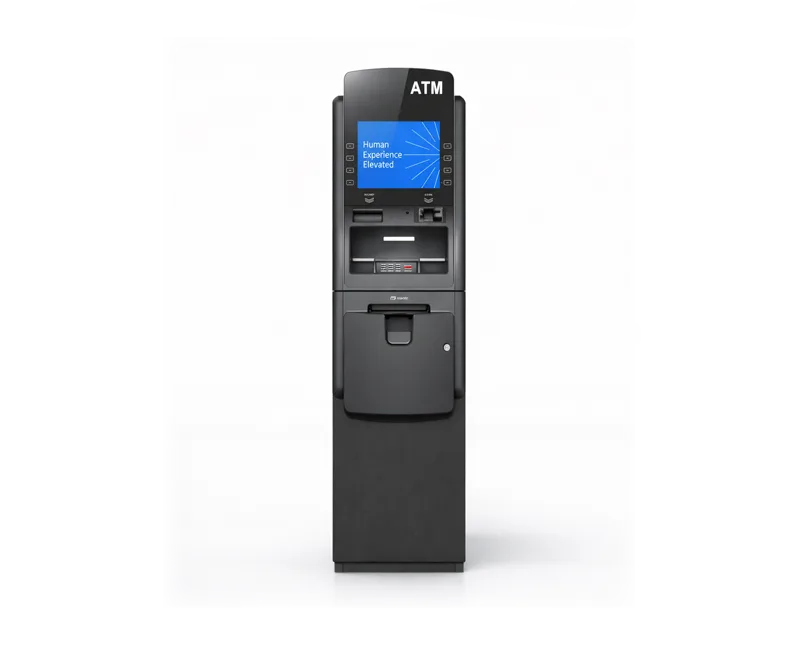
A standard retail ATM with a single 1,000-note cassette loaded in $20 bills holds a maximum of $20,000. Bank-branch ATMs with multiple cassettes typically hold $50,000 to $200,000. High-traffic machines at casinos and airports can exceed that depending on denomination. In practice, most independently operated ATMs in bars, convenience stores, and hotels are loaded with $2,000 to $10,000 at a time, well below their physical capacity, for security and cash-flow reasons.
Most people who use an ATM have no idea what is on the other side of the safe door. The number varies more than you would expect: the same model of machine can hold anywhere from $2,000 to $20,000 depending entirely on how the operator chooses to load it. And a bank’s ATM down the street might hold ten times that. This guide breaks down the real numbers by machine type, explains the cassette system behind them, and covers why operators almost never load a machine to its physical maximum.
The Cassette System: How ATMs Store Cash
Cash inside an ATM sits in removable metal containers called cassettes. Each cassette holds a single denomination of bills and feeds them one at a time through the dispenser mechanism to the cash outlet where the customer picks them up. The number of cassettes a machine carries, and the capacity of each, determines the total amount of cash the machine can physically hold.
Most retail ATMs have one cassette. Bank-branch ATMs typically have two to four. High-volume machines at financial institutions and casinos can have four or more large-capacity cassettes, each holding up to 2,000 notes or more.
| Cassette Size | Notes Capacity | Value in $20s | Value in $50s | Value in $100s |
|---|---|---|---|---|
| Standard (1K) | 1,000 notes | $20,000 | $50,000 | $100,000 |
| High-capacity (2K) | 2,000 notes | $40,000 | $100,000 | $200,000 |
| Four cassettes (1K each) | 4,000 notes total | $80,000 | $200,000 | $400,000 |
| Four cassettes (2K each) | 8,000 notes total | $160,000 | $400,000 | $800,000 |
The theoretical maximum of $800,000 for a four-cassette machine loaded exclusively with $100 bills exists only in a spreadsheet. In the real world, no independent retail ATM operator is filling a machine with that amount. The security risk alone would make it uninsurable. The numbers above are useful for understanding the math, not as a target for loading.
How Much Cash Each ATM Type Actually Holds
Standard Retail ATM (Bar, Convenience Store, Hotel)
The machines you encounter in most everyday retail settings, the kind sold by Genmega, Hyosung, and Triton to independent operators, typically have a single 1,000-note cassette loaded with $20 bills. That is a physical maximum of $20,000.
But physical maximum and actual load are different things. Most independent operators load their retail ATMs with $2,000 to $10,000 at a time. A bar doing moderate business might run on $3,000 between weekly loads. A dispensary near a busy highway might need $8,000 to last through a weekend. The right load amount matches the transaction volume at that specific location, not the cassette’s theoretical ceiling.
| Location Type | Typical Load Amount | Physical Max (1K cassette) | Why Not Loaded to Max |
|---|---|---|---|
| Bar or restaurant | $2,000 to $5,000 | $20,000 | Volume doesn’t require it. Excess cash is idle capital. |
| Convenience store | $5,000 to $15,000 | $20,000 | Higher volume but security concerns limit the load. |
| Hotel lobby | $5,000 to $10,000 | $20,000 | Weekend spikes managed; mid-week volume stays low. |
| Cannabis dispensary | $5,000 to $20,000 | $20,000 | Cash-heavy business may justify loading to max regularly. |
| Nightclub or event venue | $8,000 to $20,000 | $20,000 | High one-night demand; may load to near-max on weekends. |
Bank-Branch ATM
Bank-owned ATMs are a fundamentally different animal. They typically carry two to four cassettes with higher per-cassette capacities than retail machines, they are refilled by armored car services on a regular schedule, and they serve far more transactions per day than a retail ATM at a bar or hotel.
A typical bank-branch ATM holds between $50,000 and $200,000. The precise amount varies by branch volume, the bank’s cash management strategy, and whether the branch also provides teller services. High-volume urban branches load their ATMs to the upper end of that range; rural branches with lower foot traffic carry less.
Casino and Airport ATM
These are the machines where the numbers start to look genuinely large. Casinos and airports have customers who need cash urgently, have limited alternatives, and often need larger withdrawal amounts than the average retail customer. The combination of high transaction volume, large average withdrawal sizes, and 24-hour operation means these machines need to be stocked heavily to avoid running empty at the worst possible time.
Casino ATMs and busy airport machines typically hold $100,000 or more, often across multiple cassettes with a mix of $20s and $50s. Some casino floor ATMs in Las Vegas are loaded with significantly more during peak periods like holidays and major fight events. The specific load amount is set based on transaction history and refill logistics, not a fixed policy.
Small-Volume or Low-Traffic ATM
On the other end of the spectrum: the ATM tucked into the corner of a quiet laundromat, a rural gas station, or a small independent shop with light foot traffic. These machines may hold as little as $1,000 to $3,000 between loads. Operators in low-volume locations sometimes load just a few days of expected transactions at a time to minimize the cash tied up in the machine and reduce the value at risk if the machine is broken into.
Why ATMs Are Almost Never Loaded to Their Physical Maximum
If a machine can physically hold $20,000, why do most retail operators load $3,000 to $8,000? Four practical reasons drive that decision:
1. Idle Capital Has a Real Cost
Cash sitting inside an ATM is not earning anything. Every dollar loaded into the machine is a dollar that could be in a business checking account generating interest, deployed in inventory, or used for any other productive purpose. Operators try to match their vault cash load to their transaction demand as precisely as possible. Loading $20,000 into a machine that will only dispense $4,000 before the next refill means $16,000 is sitting doing nothing for the period between loads.
2. Security and Insurance Limits
Independent ATM operators carry insurance on the vault cash inside their machines. Insurance policies typically have per-machine limits, and exceeding them either voids coverage or requires paying a higher premium. The insurance cap often sets the practical load limit for operators at lower-security retail locations. A machine with enhanced security measures (Level 1 vault, alarm integration, security camera monitoring) may be able to carry a higher insured amount than a basic retail unit.
3. Theft Risk Management
A machine loaded with $3,000 is a less attractive target than one loaded with $20,000. Most retail ATM break-in attempts fail to access the vault, but the motivation for an attempt is partially a function of how much an attacker believes is inside. Operators in higher-risk locations deliberately keep loads conservative for this reason.
4. Refill Frequency and Route Efficiency
Operators with multiple machines often load on a set schedule. Loading each machine with just enough cash to last until the next scheduled visit is more efficient than overstocking. It keeps cash moving, simplifies reconciliation, and makes it easier to spot anomalies in transaction volume when each load closely tracks expected demand.
How Much Cash an ATM Holds by Machine Model
| ATM Model | Standard Cassette | Max Notes | Max Value ($20s) |
|---|---|---|---|
| Genmega G2500 | 1K removable | Up to 8,000 (4 cassettes) | $160,000 |
| Genmega Onyx | 1K removable | Up to 8,000 (4 cassettes) | $160,000 |
| Hyosung Halo II | 1K removable | Up to 4,000 (2 cassettes) | $80,000 |
| Hyosung Force (MX2800SE) | 1K removable | Up to 6,000 (3 cassettes) | $120,000 |
| Genmega GT5000 (TTW) | 3 cassettes standard | Up to 6,000 | $120,000 |
| Bank-branch ATM (NCR, Diebold) | Multiple cassettes | 4,000–10,000+ depending on model | $80,000–$200,000+ |
The maximum capacity figures above are theoretical maximums with every cassette fully loaded. In practice, most retail operators using Genmega or Hyosung machines load one cassette with $20 bills. The multi-cassette capacity is relevant for operators who run high-volume locations and want to extend time between refills, or for machines that need to dispense multiple denominations.
Why ATMs Run Out of Cash
Given that machines can hold $20,000 or more, it seems like running out should be rare. In practice, it happens regularly, and always at predictable times. The patterns are:
Government benefit payments, paychecks, and rent cycles create a concentrated surge in cash demand in the first few days of each month. ATMs in neighborhoods with high concentrations of benefit recipients can empty within hours of the first-of-month deposits landing. Experienced operators load to maximum capacity two to three days before the first.
Armored car services and bank employees refill on weekdays during business hours. A machine loaded Friday morning may go three to four days before Monday’s scheduled refill, covering the highest-traffic period of the week. Friday nights and Saturday nights empty machines in bar and nightclub locations faster than any other time.
A concert, festival, sporting event, or fair that draws thousands of people to an area can exhaust every ATM within walking distance in a matter of hours. Event organizers who plan ahead bring mobile ATMs specifically for this reason, but neighborhood machines catch the spillover.
A new cash-only restaurant, a market, or a neighborhood business that does not accept cards drives all nearby customers to the closest ATM. The machine that was averaging five transactions a day suddenly gets twenty, and if the operator has not adjusted the load schedule, it runs empty before the week is out.
How Much Money Does an ATM Hold by Location Type
The amount of cash inside an ATM depends far more on who runs it and where it sits than on the machine itself. Here is what each type of ATM typically holds at any given moment:
| ATM location | Typical cash loaded | Physical maximum |
|---|---|---|
| Gas station / convenience store | $2,000–$10,000 | $20,000 |
| Bar / restaurant / hotel | $3,000–$15,000 | $20,000 |
| Bank branch (in-wall / lobby) | $50,000–$200,000 | $200,000+ |
| Credit union | $20,000–$80,000 | $200,000+ |
| Casino / airport | $100,000–$400,000 | $500,000+ |
| Independent low-traffic ATM | $1,000–$5,000 | $20,000 |
The pattern is simple: independent retail ATMs run lean because the operator’s own cash is sitting idle inside them, while bank and casino machines carry far more because they are refilled by armored services and backed by institutional cash. A gas station ATM you use on a Friday night might hold $4,000; the bank ATM down the street could hold fifty times that.
Frequently Asked Questions
How much money does a gas station ATM hold?
A typical gas station or convenience store ATM holds $2,000 to $10,000 in cash, most often around $3,000 to $5,000. These are independent retail machines, so the operator loads only as much as the location needs between refills. The physical maximum for a standard single-cassette machine is $20,000 in $20 bills, but almost none run that high.
How much money does a bank ATM hold?
A bank-branch ATM typically holds $50,000 to $200,000. Multi-cassette bank machines are refilled by armored cash services and can dispense multiple denominations, so they carry far more than any retail ATM. In-lobby and drive-up bank ATMs at busy branches sit at the top of that range.
How much money does a credit union ATM hold?
Credit union ATMs usually hold $20,000 to $80,000, less than a large bank branch but more than a retail machine. Amounts vary with the size of the credit union and how busy the branch is, with shared-network and standalone units on the lower end.
How much money is in an ATM machine at any given time?
Across all types, a realistic average is $20,000 to $30,000, but the range is enormous: an independent retail ATM may hold under $5,000 while a bank or casino machine holds several hundred thousand. Location and operator type matter far more than the machine model.
How much money is in an ATM?
It depends entirely on the machine type and who loaded it. A standard retail ATM at a bar or convenience store typically holds $2,000 to $20,000 depending on how the operator loaded it. A bank-branch ATM usually holds $50,000 to $200,000. Casino and airport ATMs regularly exceed $100,000. The physical maximum for a large machine with four cassettes loaded in $100 bills is theoretically over $800,000, but that configuration essentially does not exist in practice.
How much money does a cash machine hold?
In the UK and other markets, “cash machine” means the same thing as ATM. The cash holding ranges are similar to U.S. figures: small retail machines hold the equivalent of a few thousand dollars, bank branch machines hold tens to hundreds of thousands. The specific amount depends on cassette count, denomination, and the operator’s loading decision.
How much does an ATM hold in $20 bills?
A single standard 1,000-note cassette holds exactly 1,000 bills. In $20 bills, that is $20,000. A machine with four 2,000-note cassettes, all loaded with $20 bills, holds $160,000. In practice, most retail ATMs have one cassette and operators load between 100 and 1,000 notes depending on their volume and cash management strategy.
How often are ATMs refilled?
It varies by location and operator. Low-volume retail ATMs might be refilled once a month or even less. Medium-volume locations are typically refilled weekly or every ten days. High-volume locations like nightclubs and busy convenience stores may be refilled multiple times per week. Bank ATMs are typically on a fixed schedule based on transaction volume projections, often daily for the highest-traffic branches.
What happens when an ATM runs out of money?
When the cassette is empty, the ATM displays an “out of service” message and stops dispensing cash. It can still accept deposits (if it has that capability) and display account balances. The machine stays out of service for cash withdrawals until someone with the vault key and access code reloads the cassette. Modern ATMs send an automatic low-cash alert to the operator when the note count drops below a set threshold, typically 150 to 200 notes, giving time to schedule a refill before the machine actually empties.
How much cash do independent ATM operators carry in their machines?
Most independent operators, the ones who place ATMs in bars, barbershops, laundromats, and convenience stores, load $2,000 to $10,000 per machine. The exact amount depends on the location’s weekly transaction volume, how often the operator can make it to the machine for a refill, and insurance limits on vault cash. Operators with remote monitoring systems set low-cash alerts and refill on demand rather than on a fixed schedule, which lets them run leaner without running out.
The Bottom Line
The amount of money inside any given ATM is a decision, not a fixed number. A machine that can hold $20,000 might have $3,000 in it on a Tuesday and be loaded to $18,000 on the Friday before a long weekend. The operator makes that call based on expected transaction volume, security considerations, insurance limits, and how much working capital they want tied up in vault cash at any given time.
From the customer side, the practical implication is that ATMs run out more often than you would expect, and the times when you most need cash (Friday night, first of the month, during events) are exactly when the machines are most likely to have been recently depleted. Having a backup ATM or a card with cash-back at checkout access is worth knowing about before you need it.
From the operator side, vault cash is working capital with a specific cycle: you load it, customers withdraw it, your processor reimburses it via ACH within 24 to 48 hours, and the surcharge revenue is your profit on top. Managing that cycle efficiently, matching your load to your volume and setting a low-cash alert at the right threshold, is one of the most concrete ways to improve the return on an ATM investment.
Explore more: ATM machines for sale, how to start an ATM business, how to load an ATM machine
Get the ATM industry update
New guides, pricing news, and operator tips from someone who actually runs machines. Free every week, unsubscribe any time.