Somewhere out there right now, someone is paying $80,000 for an ATM route that will generate $18,000 a year. That’s a 4.4x multiple on income that could disappear the moment one location owner decides not to renew.
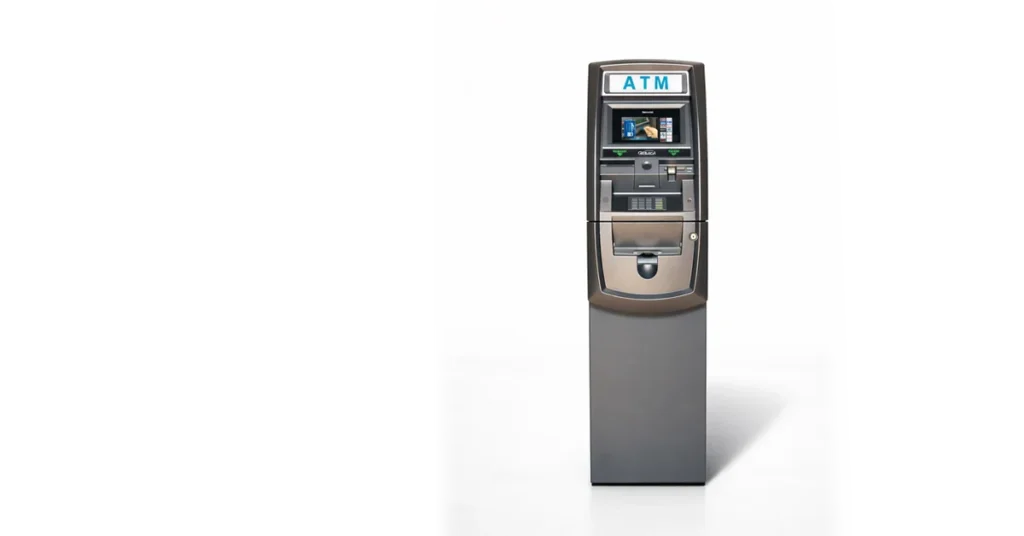
Somewhere else, another person is scraping together $8,000, buying a used Genmega, placing it in a corner store, and quietly building a business that will be worth six figures in three years.
Both paths can work. Both can fail. What separates them isn’t luck, it’s whether you asked the right questions before spending the money.
This guide is for anyone searching for an ATM business for sale or considering building their own from scratch in 2026. We’ll cover real costs, realistic profits, exactly what to verify before buying an existing operation, and how to decide which path actually fits your situation.
Why the ATM Business Is Still Worth Talking About in 2026
Every few years, someone predicts the end of cash. Every year, ATM operators keep cashing checks.
Cash usage in the United States has declined, that’s real. But it hasn’t disappeared, and certain markets are deeply cash-dependent: bars, nightclubs, food trucks, flea markets, cannabis dispensaries (where card processing remains limited), laundromats, barbershops, and neighborhoods where a meaningful portion of residents remain unbanked or underbanked.
The U.S. ATM services market sits around $8–9 billion in 2026. Average surcharge fees have crept up to $3.00–$3.22 in many markets. A well-placed machine in a strong location generates 250–400 transactions per month. At $3.00 per transaction, that’s $750–$1,200 in gross surcharge revenue, per machine, per month.
The opportunity is real. The risk is also real. Let’s look at both sides.
What’s Actually for Sale When You See “ATM Business for Sale”
Not every listing that says ATM business for sale is selling the same thing. Before you respond to a listing or engage a broker, understand exactly what you’re evaluating:
| Listing Type | What’s Included | Typical Price Range |
|---|---|---|
| Single ATM with placement | One machine in an existing location with a signed agreement | $3,000 – $15,000 |
| Small ATM route for sale | 3–10 machines, existing locations, some with processing set up | $20,000 – $100,000 |
| Mid-size ATM business for sale | 10–30 machines, established routes, full processing, cash loading arrangements | $80,000 – $300,000 |
| Large operation | 50+ machines, dedicated staff, vault relationships, possibly branded | $400,000 – $1.5M+ |
| ATM companies for sale | Full business entity with contracts, equipment, staff, processing relationships | Varies widely, verify every component |
The category matters because your due diligence process looks completely different for a 3-machine route versus a 50-machine operation. Don’t apply the same level of scrutiny to both, and don’t apply too little scrutiny to either.
Option 1: Buying an Existing ATM Business or Route
The appeal of buying an existing ATM machine business for sale is obvious: someone has already done the hard work. The machines are installed, the locations are producing transactions, the processing is set up. You wire money, you take over, you collect revenue.
Except it’s never quite that clean.
What You’re Actually Paying For
ATM businesses are typically priced at 3–4x verified annual net profit. A business generating $30,000 per year net should sell for $90,000–$120,000. That multiple is the market norm. If you see a business priced significantly below that, ask why, it usually means expiring contracts, declining volume, aging equipment, or a seller who has already lost key locations.
Here’s the critical thing most buyers miss: you’re not buying machines, you’re buying location agreements. The machines are just hardware. What creates the revenue is the placement, and if those placements aren’t locked in with written agreements that transfer to you, you haven’t bought a business. You’ve bought some ATMs and a list of addresses.
The Red Flags That Blow Up Deals After Closing
These are the issues that experienced buyers check for before signing anything. First-time buyers often don’t find out until after the money has moved.
- Month-to-month location agreements, If key locations aren’t under contract with at least 12 months remaining, the seller could lose them at any time. A handshake deal with a bar owner is not an asset you can price into a purchase.
- Revenue averages that hide weak machines, A common seller tactic is to present an average across all machines. Ask for the per-machine breakdown. You may find that 2 machines do 400+ transactions while 6 machines do 80–100. The average looks fine; the individual machines do not.
- Processor transfer complications, Some processing agreements don’t transfer automatically. The new owner may be forced into a less favorable rate, or the processor may require a new contract entirely.
- Equipment age and compliance issues, Older machines may require upgrades to remain on the network. Verify that every machine in the portfolio is currently PCI-compliant and EMV-ready.
- Cash loading arrangements that aren’t documented, If the current owner is personally loading cash and that arrangement isn’t transferable (or priced into the sale), your operating cost picture just changed.
Before you buy any ATM route for sale, demand 12 months of transaction reports, for each individual machine. Not averages. Not annual summaries. Monthly counts, per machine, for the past year.
What a Good ATM Route for Sale Looks Like
- Written placement agreements with at least 12–24 months remaining on the top locations
- Per-machine transaction data going back 6–12 months, showing consistent volume
- At least 70% of machines generating 200+ transactions per month
- EMV-compliant, current-generation equipment
- Clear processor relationship that transfers to the buyer
- Seller willing to stay involved in a 30–60 day transition period
- Price at 3–3.5x verified annual net, not 5x projected annual gross
If you want a deeper breakdown of how to evaluate ATM routes specifically, read our full guide on ATM routes for sale in 2026, it covers the evaluation process in detail including how to calculate what a route is actually worth.
Option 2: Building Your Own ATM Business from Scratch
Building your own ATM operation is slower, but it’s the path that most successful independent operators recommend, especially for your first year. Here’s why: when you build from scratch, you learn every component of the business before you scale. You know what a good location feels like. You understand the processing economics. You’ve loaded cash yourself at midnight on a Saturday. That knowledge is invaluable when you eventually start evaluating other ATM businesses for sale.
Real Startup Costs for 2026 (First Machine)
| Cost Item | Low End | High End | Notes |
|---|---|---|---|
| ATM machine (used, refurbished) | $1,500 | $3,000 | Genmega G2500 or Hyosung 1800SE range |
| ATM machine (new) | $3,500 | $6,000 | Only for proven, high-traffic locations |
| Installation and delivery | $200 | $800 | Higher for outdoor/through-wall installs |
| Initial vault cash | $3,000 | $8,000 | Working capital, stays in the machine |
| Processing setup | $0 | $500 | Most modern processors have no setup fee |
| LLC formation + EIN | $100 | $500 | Do this before your first machine |
| Insurance (optional year 1) | $300 | $600 | Covers theft and vandalism |
| Total (used machine) | $5,100 | $12,900 | Most first-time buyers land around $7,000–$9,000 |
What Monthly Profit Actually Looks Like
Let’s run real numbers instead of best-case projections. This is a solid but not exceptional location, a convenience store with consistent foot traffic and no competing ATM within a block:
- Monthly transactions: 280
- Surcharge fee: $2.75
- Gross surcharge revenue: $770
- Processing fee (ISO): -$20
- Location commission (25% of surcharge): -$192
- Cash loading labor (self-loaded, 2 visits): -$0 (your time)
- Maintenance budget (monthly average): -$40
- Net monthly profit: ~$518
On an $8,000 investment (machine + vault cash + setup), that’s a break-even point of roughly 15 months. At 5 machines performing at this level, you’re generating $2,500–$2,600 in net monthly income, and your portfolio would be worth $100,000–$120,000 if you sold it at a 3.5x multiple.
That’s the business model. Simple math, but it only works if the locations perform.
Buy vs Build: Direct Comparison for 2026
| Factor | Buy an ATM Business for Sale | Build Your Own |
|---|---|---|
| Capital Required | $20,000 – $300,000+ | $5,000 – $15,000 to start |
| Time to First Revenue | Immediate (1–3 month transition) | 3–12 months |
| Learning Curve | Steep, you inherit problems you don’t yet know how to identify | Manageable, you learn as you go |
| Location Quality Control | You inherit whatever the seller built | You choose every location |
| Risk of Overpaying | High if due diligence is weak | Low, you know every dollar spent |
| Scalability | Fast, if the base is solid | Slower initially, but on your terms |
| Best For | Experienced operators or buyers with capital and strong due diligence | First-time operators willing to grind for 12–24 months |
The honest answer: Most people who are new to the ATM industry should build before they buy. Not because buying is wrong, it’s an entirely valid strategy, but because you’ll negotiate far better prices, spot far more red flags, and make far smarter decisions on an ATM business for sale if you already understand how the business works from the inside.
The Hybrid Path: How Most Successful Operators Actually Grow
The cleanest playbook for 2026 looks something like this:
- Start with 1–2 machines you source and place yourself. Budget $7,000–$15,000. Spend 3–6 months learning the operational reality, cash loading, processing, machine issues, location relationships.
- Get your locations performing at 250+ transactions per month each. Once you’ve proven the model works and you understand what good looks like, you’re in a position to evaluate other operators’ work critically.
- Identify a small ATM route for sale, 3–8 machines in a geography you know. You can now evaluate the transaction data intelligently, negotiate from a position of knowledge, and spot the weak machines in a bundled deal.
- Buy the route, but only keep the locations that perform. Relocate underperforming machines to better spots you’ve already identified.
- Repeat. At 10–15 machines you can bring in a cash-in-transit partner to handle loading and essentially remove yourself from day-to-day operations.
This path takes 2–4 years to reach meaningful scale. But it produces an operation that’s genuinely worth buying, and you’ll know exactly how to price it when you eventually sell.
Due Diligence Checklist: Before You Buy Any ATM Business
Run through every item on this list before signing anything or wiring any money. If a seller resists any of these requests, that resistance is itself a data point.
- ☑ Transaction reports for each individual machine, 6–12 months of monthly data
- ☑ Copies of all placement agreements, verify term lengths, renewal dates, commission structures
- ☑ Site visits to at least 50% of locations (100% for any deal over $50,000)
- ☑ Confirmation that processing agreement transfers to buyer, and at what rate
- ☑ Age, model, and compliance status of every machine in the portfolio
- ☑ Service history on machines older than 3 years
- ☑ Cash loading arrangement, who does it, at what cost, and does it transfer?
- ☑ Confirmation of no pending legal issues, processor disputes, or location cancellation notices
- ☑ Independent legal review of the purchase agreement
- ☑ 30–60 day transition period in the contract with seller involvement
Where ATM Businesses Are Actually Listed for Sale in 2026
If you searched “ATM business for sale,” you probably wanted listings, so here is where they really live and what asking prices look like when you get there:
| Source | What you find there | Typical asking price |
|---|---|---|
| Business broker marketplaces (BizBuySell, BizQuest) | Established routes of 5–50+ machines, usually with seller financing offered | 2.5–3.5x annual net |
| Direct from operators | Small routes and single placed machines, found through processor reps and operator groups | 2–3x annual net |
| ATM dealers | Machine-plus-placement packages for new locations rather than earning businesses | Equipment price + fees |
| Auction and liquidation sites | Equipment only. The locations, the actual business value, are almost never included | Machine value only |
Two things to remember when reading listings. First, asking multiples are asking, not selling; routes regularly close 15 to 25 percent below the listed price once real transaction reports come out. Second, a listing that quotes gross revenue instead of net is hiding the location splits and processing costs, which is exactly where weak routes bury their problems. Our route evaluation guide walks through the due diligence numbers machine by machine.
Frequently Asked Questions
How much should I pay for an ATM business for sale?
Market standard is 3–4x verified annual net profit, where “verified” means you’ve reviewed the actual transaction reports and confirmed the expense structure independently. If a seller quotes you 5x or higher, you need a compelling explanation, typically exceptional location longevity or signed long-term contracts. Never apply a multiple to projected or potential revenue.
Are ATM businesses for sale typically profitable?
Strong machines in strong locations are profitable. Weak machines in weak locations are not. The issue isn’t the business model, it’s whether the specific locations being sold actually perform. Before buying, verify that the majority of machines are generating 200+ transactions per month consistently. If they are, the business is profitable. If they aren’t, the price needs to reflect that.
What’s the difference between an ATM route for sale and an ATM business for sale?
An ATM route for sale typically refers to a collection of placements, sometimes including machines, sometimes just the contracts and relationships. An ATM business for sale implies a more structured operation with equipment, processing relationships, and documented revenue. In practice, the terms are used interchangeably in listings, so always clarify exactly what’s included in the asking price.
Can I start an ATM business with $5,000?
Yes, if you’re building from scratch with a used machine. A refurbished ATM costs $1,500–$2,500, vault cash is $2,000–$3,000, and setup costs are minimal. You won’t be buying an existing ATM business for sale at that budget, but you can absolutely get one machine in a good location and start building. Read our guide on how to start an ATM business in 2026 for the full step-by-step process.
How do I find ATM businesses for sale?
Business brokers are the most reliable source for verified listings, they typically require sellers to provide financial documentation. Industry marketplaces and forums also list ATM routes for sale directly from operators. For smaller deals (under $20,000), operators also sell machines and routes directly through classified listings. Always verify independently regardless of source.
The Bottom Line
Buying an ATM machine business for sale gets you to revenue faster. Building your own gives you control and knowledge that makes every future decision better.
Neither path is inherently superior. Both fail regularly for operators who skip the fundamentals, verifying location quality, understanding the actual cost structure, and treating placement agreements as the assets they are.
If you’re still figuring out what machine to buy for your first placement, our guide on how to choose the right ATM machine for your location walks through that decision in detail, brands, models, features that matter, and features that don’t.
And if you’re specifically evaluating a portfolio of machines, what to look for, how to price it, and when to walk away, read our deep dive on ATM routes for sale.
The information is here. What happens with it is up to you.
Explore more: Nautilus Hyosung ATM guide, ATM machines for sale, ATM withdrawal limits by bank
Get the ATM industry update
New guides, pricing news, and operator tips from someone who actually runs machines. Free every week, unsubscribe any time.