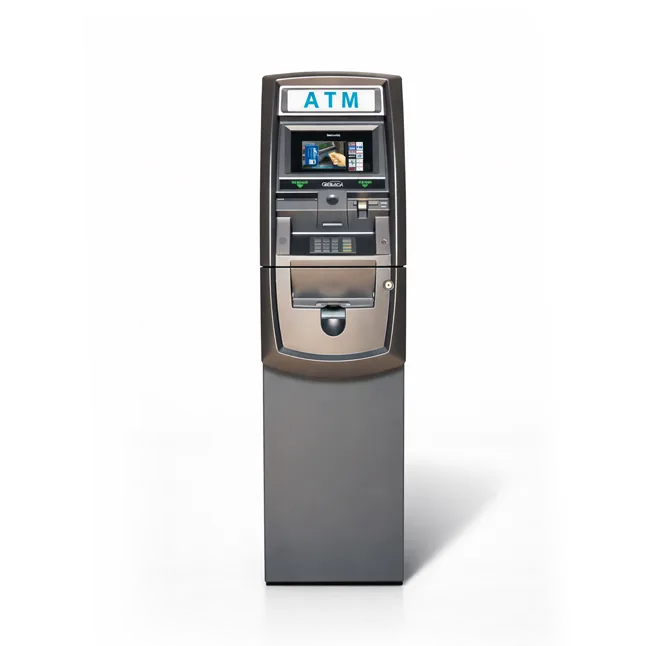
A placement agreement is the contract that puts your ATM inside someone else’s business. If you run a route you will actually sign three different agreements: one with the location owner, one with the cash loader who stocks the machine, and sometimes one with a broker who found you the site. They are different documents with different terms. Below is what belongs in each, the clauses I do not sign without, how the negotiation really goes, and the three templates you can download.
Most articles about placement agreements hand you a generic two-party contract and stop there. That is not how it works once you have machines in the field.
I have signed these from every angle: putting my own machines in, negotiating with store owners who wanted a bigger cut, hiring loaders to fill machines I could not get to, and paying brokers to bring me sites. What follows is what actually goes in these documents, why each clause exists, and what happens when it is missing.
The three agreements you will actually sign
Before you look at a single clause, know which document you are writing. Each one covers a different relationship and protects against a different problem, and confusing them is how operators end up with contracts that do not cover what actually goes wrong.
How I set the loader’s pay: if a site is doing a solid 200 to 400 transactions a month, I will give the loader about a third of the surcharge. At that volume it is worth their trip and the machine still earns. On a slower site I do not do a percentage at all, I pay a fixed amount per fill, otherwise I am handing away a share of a machine that barely covers itself. And when I have the cash and the time, I load it myself and keep the whole thing.
Brokers I will pay either 5 to 7 cents per transaction for as long as the machine runs, or a one-time flat fee. Which one depends on the site and whether I want to share the tail income or just settle it once and be done.
The clauses that matter
These are the terms I insist on. Each one exists because something specific goes wrong without it.
How the agreement actually gets placed
A good document is half of it. Here is how one goes from a conversation to a machine on the floor.
I email the agreement and we get it signed digitally. It is faster than driving out with paper, and everything is timestamped. Some clients need slightly different handling, but this is the default.
Out of everything in the document, the negotiation is nearly always about the split. Occasionally the term. Almost never anything else.
Locations regularly try to shorten the term. I push for five and usually get it, because I am the one funding the machine, the cash, and the service for the whole period.
I give them the time. Pressuring someone into signing gets you a resentful host who quietly works against the machine. The ones who come back have actually decided.
Once it is signed, the machine is in and processing inside a week to two weeks.
On the rate, here is the honest answer I give location owners. The split has to come out of the transactions. If your site is busy, I can pay you well, because there is revenue to share. If it is quiet, I cannot, because I am still buying the machine, funding the cash inside it, and paying to maintain and service it whether it does 50 transactions a month or 500.
The number is not me squeezing you, it is arithmetic based on what your location actually does. Owners who understand that negotiate sensibly. Owners who insist on a big rate at a dead site are usually telling you they will be difficult about everything else too.
What each side should get
The location’s cut depends on volume, because volume is where the money comes from. A busy site supports a real rate. A quiet one does not, and pretending otherwise just means the machine gets pulled in a year.
| Who | What they get | When |
|---|---|---|
| Location owner | 5¢ to $1 per transaction | Toward 5¢ on a quiet site, toward $1 on a busy one |
| Cash loader | ~33% of the surcharge | On a solid site doing 200–400 a month |
| Cash loader | Fixed fee per fill | On slower sites, where a percentage is not worth it |
| Broker | 5¢ to 7¢ per transaction, or a flat fee | Per-transaction to share the tail, flat to settle once |
That 5¢ to $1 range for the location is wide on purpose, because sites are wildly different. A laundromat doing 80 transactions a month and a nightclub doing 900 cannot be paid the same way, and any operator who offers both the same number is either overpaying at one or about to lose the other.
Download the three agreements
The three agreements I use in my ATM business
These are the same three documents I use professionally to run my route: one for the location, one for the cash loader, and one for the broker. Each is a Word file with a fill-in Deal Terms box and a revenue schedule. Replace the bracketed fields with your own numbers, and have an attorney in your state review it before anyone signs.
Mistakes that cost real money
If you are the operator
- Skipping exclusivity. The fastest way to watch a good site turn mediocre.
- Giving up your right to adjust. Your costs rise, your surcharge cannot, and you are contractually stuck watching the margin disappear.
- No relocation or name-change language. They move or rebrand and act like the contract went with the old sign.
- Overpaying to win a location. A generous rate at a dead site is money you never get back, and you cannot quietly walk it back later.
- Taking a signature from whoever is behind the counter. Get the owner, with their title on the document.
If you are the location owner
- Signing a long term with no service commitment. Make response times part of the deal.
- Chasing a percentage at a quiet site. A flat per-transaction rate is more predictable when traffic is low.
- Not asking who the processor is. A legitimate operator answers immediately.
- Ignoring the exclusivity clause. Understand exactly what you are agreeing not to do for the next five years.
Frequently Asked Questions
How long should an ATM placement agreement run?
OperatorFive years is what I sign, from the install date. The operator funds the machine, the cash, the installation and the service, and that needs time to pay back. Locations commonly ask for three. It is worth holding at five, and most agree once they understand what you are carrying.
Can I get out early if the location turns out to be dead?
OperatorIf the agreement is written properly, yes. Mine lets the operator terminate without cause, precisely because sites underperform and you should not be stuck for five years in a location that is not working.
What happens if the location breaks the agreement early?
OperatorIt depends on the situation, honestly. If the owner is genuinely in trouble or just wants out and there is no bad blood, I do not chase them. I pull the machine and move on, because there is nothing to gain from fighting someone who is already struggling. But if a location is deliberately working against the agreement, letting in another machine, refusing access, that is different, and the contract gives me the ability to pursue the lost revenue.
Do you charge the location an installation fee?
OperatorNot when it is my machine. Delivering, installing, programming and servicing the ATM is my obligation under the agreement, so there is nothing to bill the location for. It is different when the merchant owns the ATM and I am only providing processing and service, in that case installation and service are chargeable, because the machine is not mine.
Can I raise the surcharge later?
OperatorOnly if you kept the right to. A properly written agreement gives the operator discretion over the surcharge, the denomination, and the machine model. Over a five-year term your costs will change, and without that clause the site slowly stops making sense.
How much should I be paid for hosting an ATM?
Location ownerIt comes down to your transaction volume, because that is the only place the money comes from. A busy site supports a real per-transaction rate. A quiet one supports a small one. Be wary of any operator promising a big rate at a location with little traffic, they will either pull the machine or stop servicing it.
Who is liable if the ATM is robbed or damaged?
Location ownerThe operator is, for the machine and the cash inside it. You are not on the hook, unless the damage or removal happened because of your negligence or with your involvement. Check that your agreement says this plainly.
Who pays for the electricity and internet?
Location ownerYou provide the power outlet. A decent operator brings their own wireless connection rather than running the machine on your Wi-Fi, which is better for both of you, your internet going down should not take the ATM offline.
What happens if I sell or move my business?
Location ownerThis is the clause most people never read until it matters. A well-drafted agreement follows the business: if you change your name or restructure, it carries over; if you relocate, you notify the operator, the machine moves with you, and the agreement automatically applies to the new premises for the rest of the term. Know which of those applies before you sign.
Can I have a second ATM, or ask a different company for one?
Location ownerNot during the term. Standard agreements say you cannot remove the machine or allow another ATM or cash-dispensing device on the premises, inside or outside, without written approval. That is the exclusivity clause, and it is the one operators enforce hardest.
Do I need a lawyer to sign one?
Location ownerFor a single location with a straightforward operator, most people sign without one. If you are signing for multiple locations, or you are the operator drafting your own template, a few hundred dollars for a review is worth it. State rules on automatic renewal and exclusivity vary.
How long from signing to a working machine?
OperatorUsually 7 to 15 days.
Bottom line
The agreement is the deal. Get the term, the rate, exclusivity and your right to adjust in writing. Make sure it follows the business if they move or rename. Confirm the person signing can actually bind the company. And do not let a location talk you into a rate their traffic cannot support, because that is the deal you will regret in year two, not the one you lost by holding your number.
If you are the location owner on the other side of this, read the exclusivity and termination clauses twice, ask who the processor is, and understand that a fair rate is the one your volume can actually carry. When you are ready, the ATM surcharge fees guide will help you sanity-check any operator’s numbers.
Get the ATM industry update
New guides, pricing news, and operator tips from someone who actually runs machines. Free every week, unsubscribe any time.